
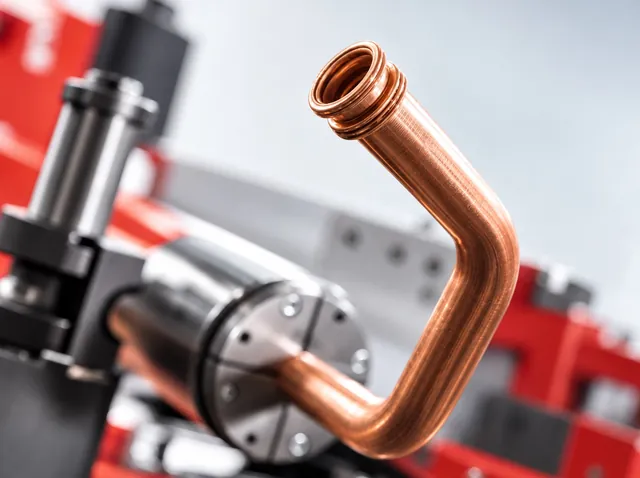
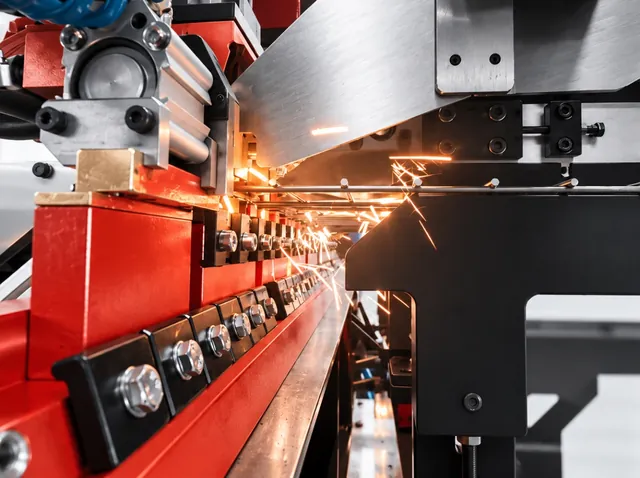
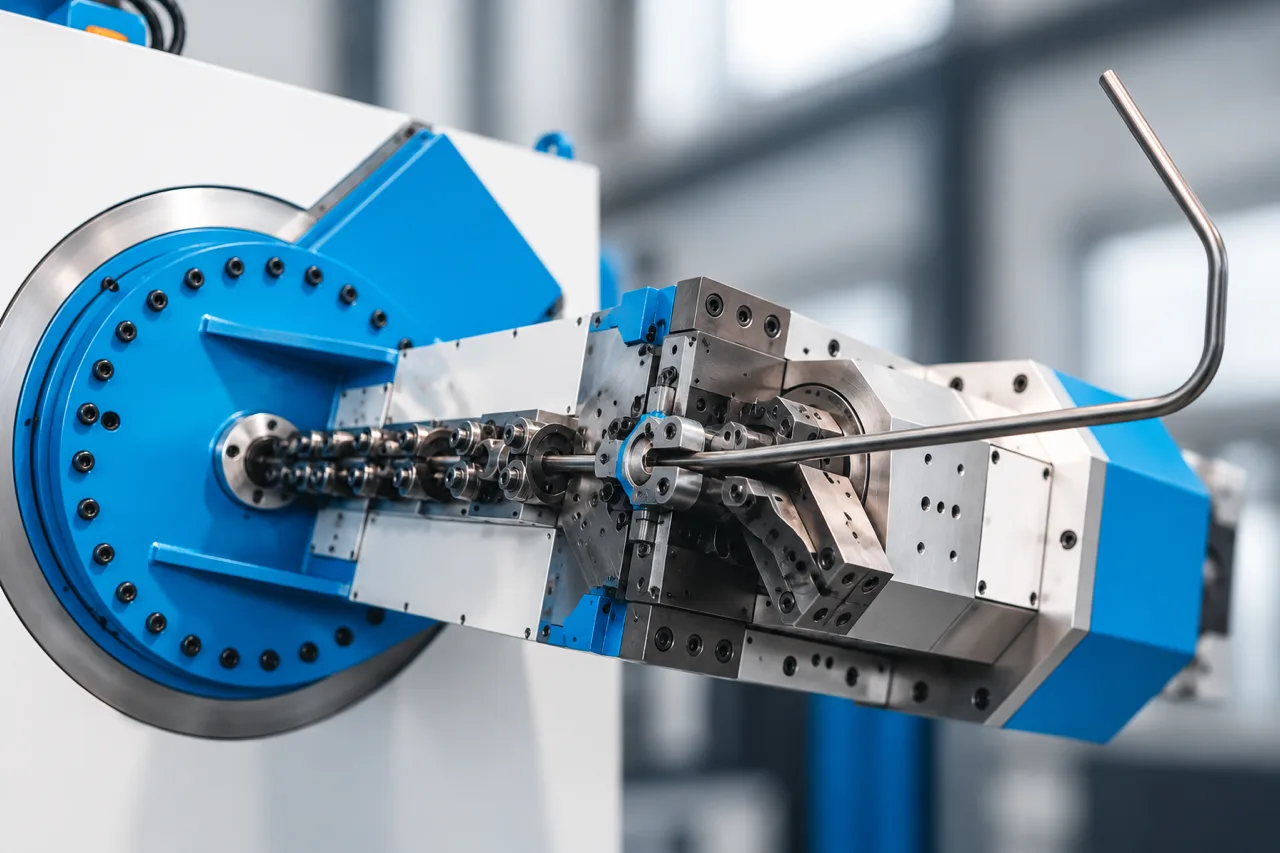
Automatic deburring and beveling machines to prepare the tube end before welding or forming.
RSA
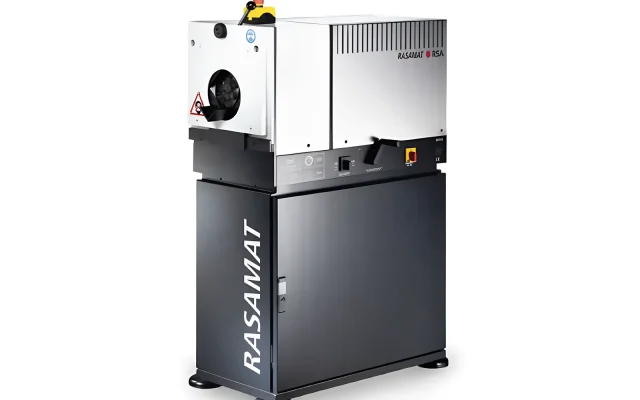
RASAMAT – Manual Deburring Machines
Two RSA manual deburring systems: RASAMAT for aluminium and complex parts.
- Desbarbadora
- Automática
RSA
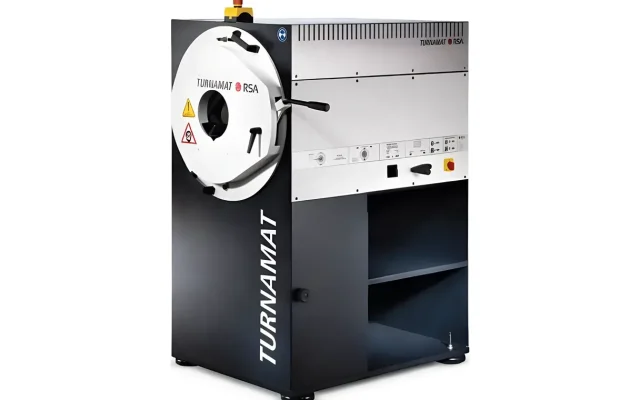
TURNAMAT – Manual Deburring Machines
Two RSA manual deburring systems: TURNAMAT for steel and stainless steel, RASAMAT for aluminium and complex parts.
- Desbarbadora
- Automática
End deburring and beveling. To prepare the tube before welding or forming.
As a standalone station or integrated in line right after cutting.
The bevel angle is set by the later weld specification, not by the machine.
Which deburring machine do you need?
Cutting a tube leaves a burr on the end that must be removed before a later welding, threading or forming operation. Deburring removes that inner and outer burr; beveling additionally machines an angle on the end to prepare the welded joint according to the standard or the part’s design.
Integrated in line or as a standalone station
In long production runs, it’s worth prioritizing automatic equipment that works continuously after cutting, avoiding handling the part between stations. In short runs or large-diameter parts, a standalone station tends to be more flexible and easier to amortize.
The bevel your weld requires
The type of bevel is set by the later welding operation’s specification, not by the machine itself. Before choosing equipment, confirm with your welding department what angle and tolerance the final joint needs, so you don’t oversize or fall short on capacity.
Deburring or end forming?
If, besides removing burrs, you also need to reduce, expand or flare the end, the right family is end forming. Both processes are often combined on the same line, right after cutting. The usual order is to cut, deburr and, if applicable, bevel before moving on to welding or assembly.
Related searches deburring machine · automatic · tube and profile cutting · tube and profile bending · end forming
Official distributors of the brands that set the standard in the industry.