Data Center Business Opportunities
Data center business opportunities for the rod industry
The digital economy isn’t ethereal. It doesn’t float in the cloud. It rests on thousands of square metres of concrete, steel, cabling and metal structures that keep data, applications and artificial intelligence running without interruption. The exponential growth of data centers in Europe and Spain isn’t just transforming the technology sector — it’s also creating a ripple effect across multiple supporting industries. Among them, the rod industry has an opportunity in front of it that many haven’t yet fully sized up.
Every new data center involves complex electrical infrastructure, massive cable-routing systems and support structures designed to guarantee stability, safety and scalability. Behind every server rack there’s a physical network that has to be manufactured, assembled and maintained with industrial precision. For rod manufacturers, this isn’t simply a new potential customer — it’s a market niche in sustained expansion, with specialized technical demand and high-volume projects.
The question is no longer whether data centers will keep growing. The strategic question is who will be ready to supply the components that this expansion needs.
The exponential growth of data centers and its industrial impact
Talking about data center business opportunities first requires understanding the scale of the phenomenon. This isn’t a one-off trend — it’s a structural transformation of the global economy.
The digitalization of business, the expansion of cloud computing, e-commerce, streaming, industrial automation and, more recently, artificial intelligence, are driving up the need for data processing and storage. Every digital service requires physical infrastructure capable of running 24/7 at maximum reliability. That translates into a constant race to build new data centers and expand existing ones.
Spain has established itself as one of southern Europe’s main hubs. Madrid and Barcelona concentrate major investment, but other regions are starting to attract projects thanks to available energy capacity and industrial land. Across Europe, data center growth has kept up a steady pace year after year, driven by demand for digital sovereignty and infrastructure decentralization.
This growth has a direct effect on the supporting industry. Every new project involves:
- Thousands of metres of electrical routing systems
- Support structures for power and data cabling
- Metal fixing and fastening elements
- Expandable modular infrastructure
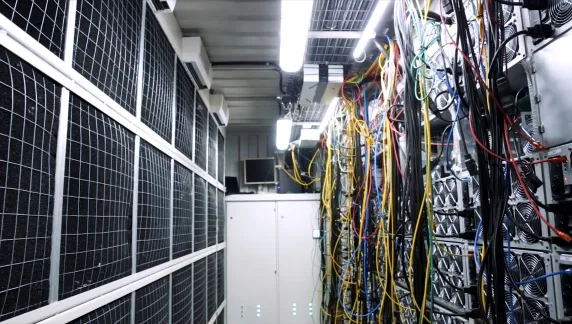
When you look at the cabling infrastructure inside data centers, the volume of material required is far from marginal. Large-scale data centers handle extremely high cabling densities, both in power lines and in fibre optics and redundant systems.
What’s more, these projects aren’t isolated events. A data center isn’t a conventional industrial building. It’s designed to grow in phases. That means demand for metal components doesn’t just appear during initial construction, but also in ongoing expansions, upgrades and adaptations.
From an industrial standpoint, this creates three key factors:
- Sustained volume
These aren’t sporadic projects, but a sector undergoing structural expansion. - Technical demands
Safety and quality standards are high, which favours manufacturers capable of working with precision and repeatability. - Market stability
Data centers are part of critical infrastructure. Their development responds to permanent needs of the digital market.
For the rod industry, this means a shift in focus. Traditionally tied to conventional construction or generic industrial applications, it can now turn toward a sector where growth doesn’t depend on the traditional real-estate cycle, but on global technological progress.
In this context, the strategic question is no longer whether the market will grow, but how to position yourself within it before specialized suppliers become established.
The invisible infrastructure that keeps a data center running
When people picture a data center, the usual image is of endless rows of server racks with blinking lights. But what’s truly critical isn’t what you see — it’s the infrastructure that lets everything run continuously and safely.
A data center is, in essence, a highly complex electrical and industrial facility. Cabling density is far higher than in any conventional building. Main power feeds, redundant lines, generators, UPS systems, fibre optics, climate control and monitoring systems… all of it requires robust, well-designed physical support structures.
This is where metal infrastructure takes centre stage.
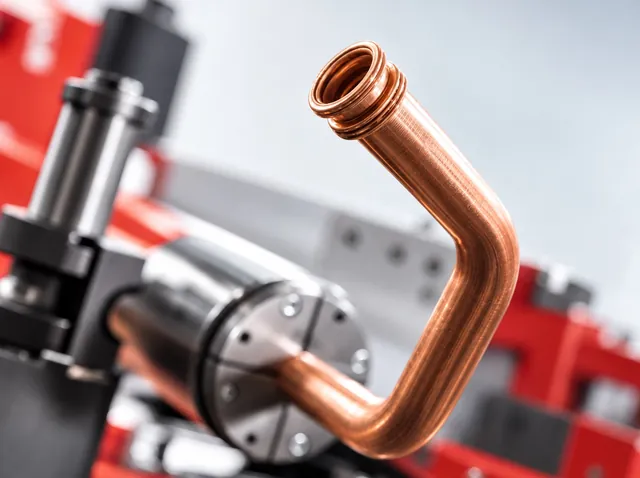
Inside a data center you’ll find multiple metal components used to support, organize and protect the cabling. Many of them are made from rod that’s been transformed, bent or formed with industrial precision.
The main elements include:
- Rod supports for cable trays
- Suspended structures for overhead routing
- Auxiliary racks for electrical systems
- Metal reinforcement for modular installations
- Fixing systems designed for future expansion
Each of these components must meet specific requirements:
- Mechanical strength against concentrated loads
- Structural stability in high-density installations
- Dimensional precision for series assembly
- Adaptability to modular designs
Manufacturing rod supports for this environment isn’t the same as traditional production for civil works. Here, repeatability, uniformity and the ability to produce long runs within tight tolerances are decisive factors.
What’s more, data centers are designed to scale. That means metal solutions need to fit into structures that allow expansion without compromising stability or safety. This opens the door to specific rod-component designs optimized for this type of facility.
For an industrial manufacturer, this raises a relevant strategic question: it’s not just about selling rod as raw material, but about producing transformed components with greater added value.
And that’s where a clear opportunity appears.
The sector needs manufacturers capable of adapting to technical specifications, producing with industrial precision and responding to high-volume projects. We’re not talking about one-off parts. We’re talking about systematic production aimed at critical infrastructure.
Understanding what to manufacture for the data center sector means analysing this invisible infrastructure and identifying where transformed rod becomes a key element of the system.
Why this market is a real opportunity for rod manufacturers
Identifying a growing sector isn’t enough. The real question for a manufacturer is whether that growth is accessible and profitable.
In the case of data centers, the answer depends on how you look at the value chain.
The big tech operators don’t buy transformed rod directly. They work with engineering firms, specialized contractors and industrial electrical installers. These are the players who demand metal components for routing systems, supports and auxiliary structures.
This means market access isn’t closed or exclusive. There’s a network of industrial suppliers who need manufacturers capable of producing rod components with consistent quality and reliable supply capacity.
For many companies already working corrugated or transformed rod, this isn’t a leap that means starting from scratch. It means diversifying.
Some reasons why this growing industrial niche is especially attractive:
- Structural, not cyclical, demand
Digitalization and artificial intelligence aren’t temporary trends. They’re permanent economic drivers that will continue fuelling data center construction. - High-volume projects
A single data center can require significant quantities of metal supports and routing systems. Series repetition favours optimized production processes. - Clear technical requirements
Unlike other markets where price is the only deciding factor, quality, precision and reliability carry more weight in critical infrastructure. - Moderate barriers to entry
No radical business transformation is required, just production adaptation and the right commercial approach. - Early strategic positioning
Entering the sector before specialized suppliers become established lets you build experience and references.
For anyone wondering how to enter the data center market from rod manufacturing, the key isn’t competing on price, but understanding the product’s end application.
The rod industry has experience in construction, heavy industry and metal structures. The next step is carrying that capability over to components with a higher level of transformation and added value.
This is where a fundamental question arises:
Is your production setup ready to manufacture rod components in series with consistent tolerances and a high level of repeatability?
Because if the market grows — and everything points to it doing so — the manufacturers who can respond with industrial efficiency will be the ones who capture that opportunity.
And that leads us directly to the next point: what it actually means to expand production capacity to serve this sector.
What expanding production capacity for this sector really means
Spotting an opportunity is the first step. Being able to seize it is a very different matter.
The data center market doesn’t just demand raw material. It requires transformed components with precision, consistency and series-production capacity. The difference between manufacturing rod for conventional applications and manufacturing rod supports for critical infrastructure lies in the production demands.
In this environment, there’s no room for improvisation.
To respond to projects tied to data center cabling infrastructure, a manufacturer must guarantee:
- Absolute repeatability on every part
- Consistent tolerances across large volumes
- Sustained production capacity
- Flexibility to adapt to different designs
- Optimized time and cost per unit
This means reviewing your current production setup.
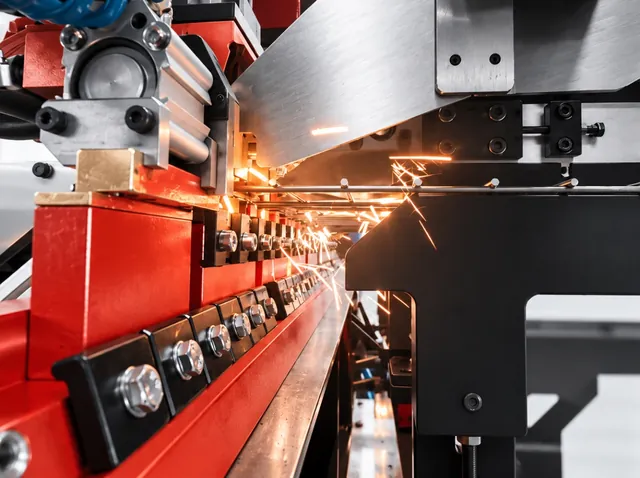
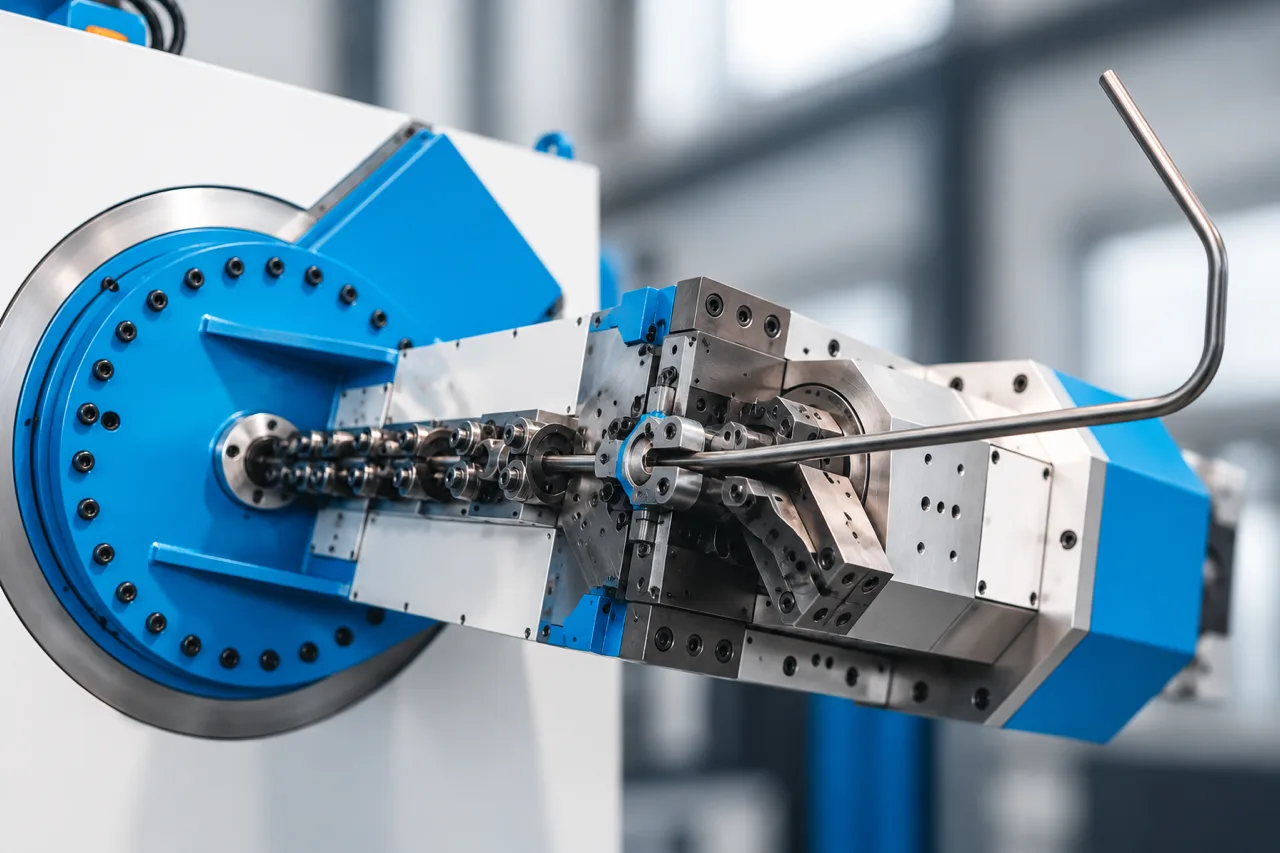
Many workshops work with partially manual processes or basic bending machinery. These systems can be enough for one-off jobs or small orders, but when we’re talking about systematic production for a growing sector, industrial efficiency becomes a decisive factor.
Manufacturing metal supports for electrical routing requires:
- Precise, repeatable bending
- Exact cuts with minimal deviation
- The ability to program different geometries
- Production rates matched to large-scale projects
This is where investment in industrial machinery stops being a cost and becomes a strategic tool.
Automation allows you to:
- Cut manufacturing time per part
- Reduce human error and rework
- Increase production capacity without multiplying labour costs
- Improve competitiveness against less-automated suppliers
What’s more, when it comes to automated production of rod components, the ability to offer long runs with uniform quality becomes a strong sales argument with engineering firms and installers.
The key question isn’t whether your current machinery can produce a few parts for this sector. It’s whether it can do so profitably, scalably and consistently over time.
Because the real potential of the data center market isn’t in a single isolated project. It’s in continuity.
And to capture that continuity, your production setup has to be ready to respond without friction.
Getting ahead today to manufacture where tomorrow’s demand will be
The rod industry has spent decades proving its ability to adapt to different sectors: construction, civil works, heavy industry. But traditional cycles are no longer the only driver of growth.
Digitalization is redefining the world’s physical infrastructure. Every technological advance needs a solid material base. And data centers are the most visible expression of that transformation.
For rod manufacturers, the opportunity isn’t simply about producing more. It’s about producing differently. About identifying higher-value-added applications. About adapting production processes to sectors that don’t depend solely on the real-estate cycle, but on an unstoppable structural trend.
The exponential growth of data centers isn’t a theoretical forecast. It’s a reality already under way. The strategic question is who will be ready to meet the needs that this growth generates.
Looking into the possibility of expanding capacity through specialized machinery could be the step that makes the difference between taking part occasionally and positioning yourself as an established supplier in a growing sector.
If you’re considering new production lines or want to explore what type of machinery can help you manufacture rod components for the data center sector, now is the time to start that conversation. Getting ahead today can mean leading tomorrow.