Profile Bending in Industrialized Construction
Profile Bending in Industrialized Construction
Innovation and precision for the future of the sector
Industrialized construction is profoundly transforming the way we conceive, design and execute architectural projects. In this new paradigm, metal profile bending stands out as a key solution for bringing flexibility, efficiency and aesthetics to modern buildings. Below, we look at how this technique and related technologies, such as the VENUS50 CNCi and Thoman RB3 machines, are improving manufacturing in the sector.
What is industrialized construction and why is it revolutionizing the sector?
Industrialized construction is a building model based on manufacturing structural or architectural components in controlled industrial environments — such as factories or specialized workshops — for later assembly on site. This system applies series-production and lean-manufacturing principles, aiming to maximize efficiency, reduce human error and ensure consistent quality control.
Its key foundations include process standardization, modularity, the use of advanced technologies and a focus on sustainability. All of this enables greater precision in design and execution, together with a significant reduction in environmental impact.
Advantages over traditional construction
The main difference between industrialized and traditional construction is where and how the building’s components are made. Instead of carrying out each phase sequentially on site, production happens simultaneously in the factory, significantly speeding up execution times.
Other benefits include:
- Lower costs thanks to material optimization and less reliance on on-site labour.
- Greater workplace safety, since time spent working at height or in adverse conditions is minimized.
- Less waste generation, since parts are manufactured to measure.
- Flexibility in architectural design, enabling customized modular solutions.
- Greater traceability and quality control, since each component goes through a standardized, verifiable process.
Current trends and future outlook
Industrialization is currently being driven by the urgent need to build faster, more affordably and more sustainably. As regulatory requirements and energy-efficiency expectations increase, adoption of this methodology is growing in sectors such as housing, hospital and educational infrastructure, and even retail and offices.
In the coming years, this approach is expected to become the standard for sustainable, highly efficient projects, positioning companies that embrace industrialized construction as leaders of change in the sector.
The crucial role of profile bending in industrialized construction
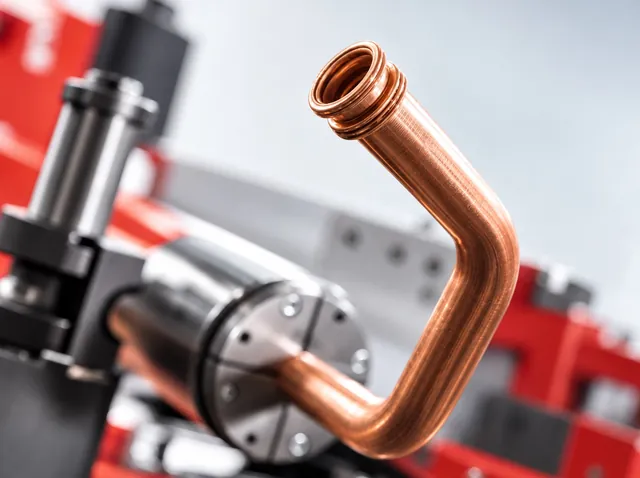
Profile bending makes it possible to manufacture structural and decorative elements with complex shapes, adapting to each project’s specific needs. In cladding, such as window and facade profiles, it improves aesthetics without compromising functionality.
Thanks to this technique, architects and designers have greater creative freedom to incorporate curves, angles and innovative shapes without sacrificing technical feasibility. This translates into unique, more functional spaces with high aesthetic value.
Benefits of profile bending for manufacturers and builders
Resource optimization and waste reduction
By adapting profiles to the project’s exact needs, unnecessary offcuts are minimized and materials are used more efficiently.
Improved efficiency and production times
Modern machines can perform precise bends in a single pass, drastically cutting working time and boosting workshop productivity.
Customization and adaptability for complex projects
Every project has its own specifications. Profile bending allows for a fast, flexible response, adapting production without the need for major additional investment.
Evolution of bending machines
Bending machines have evolved from manual tools into highly automated, electronically controlled equipment, capable of working with great precision and repeatability.
Integration of CNC systems and automation
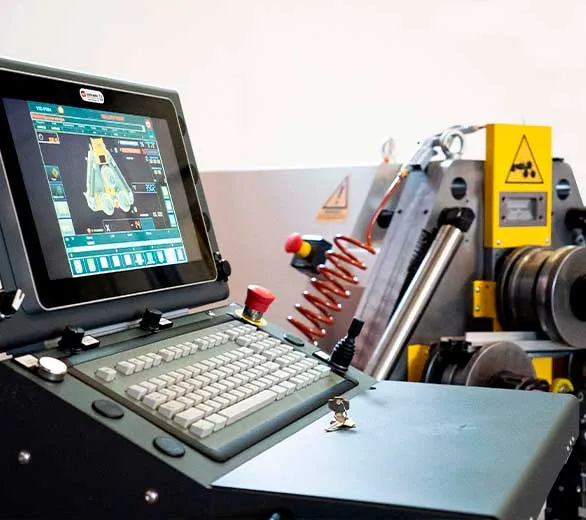
The addition of computer numerical control (CNC) and smart sensors makes it possible to program and repeat processes with great accuracy, ensuring uniform results even on large runs.
VENUS50 CNCi: Electric Precision for Complex Profiles
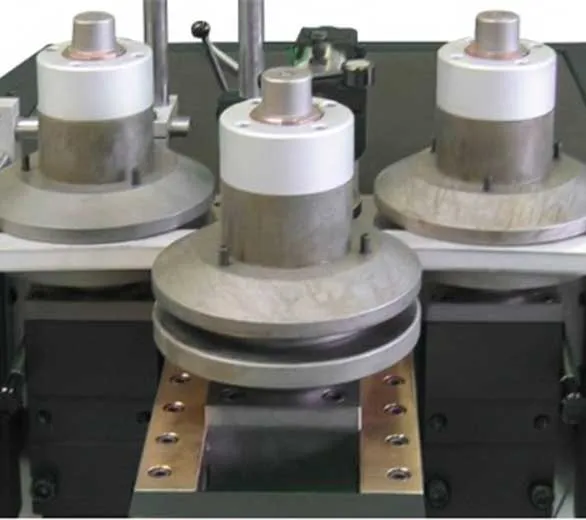
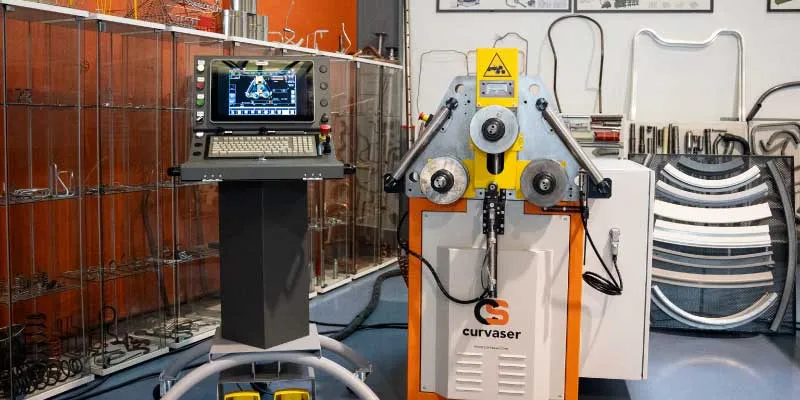
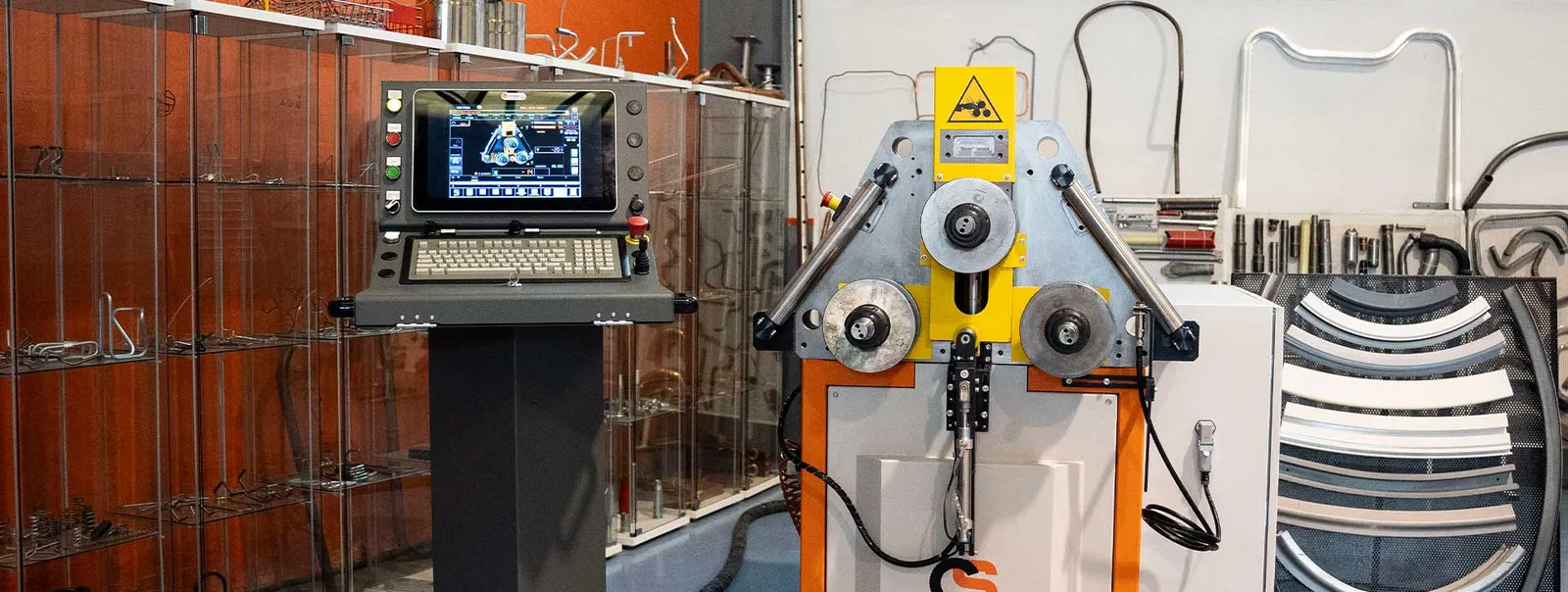
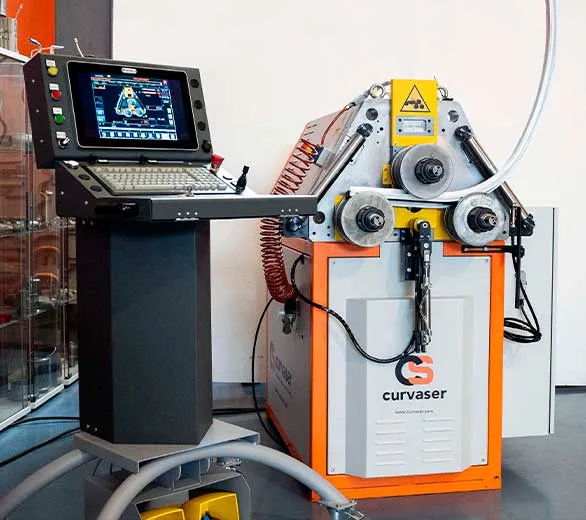
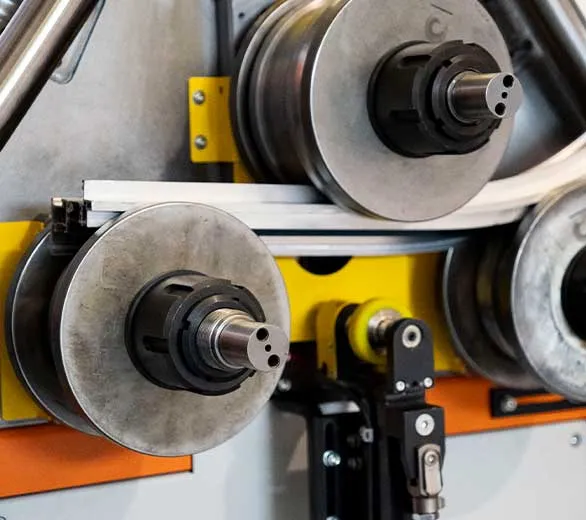
The VENUS50 CNCi is a 3-roll electric bending machine developed by Curvaser. Its main advantage is its ability to bend irregular profiles with great precision, without deformation, in a single pass. Its smart control system allows it to operate without hydraulic components, reducing maintenance and noise.
Thanks to its versatility and adaptability via optional accessories, it’s ideal for manufacturing elements such as window frames, railings, chairs, lamps or lightweight structures, in steel and aluminium profiles.
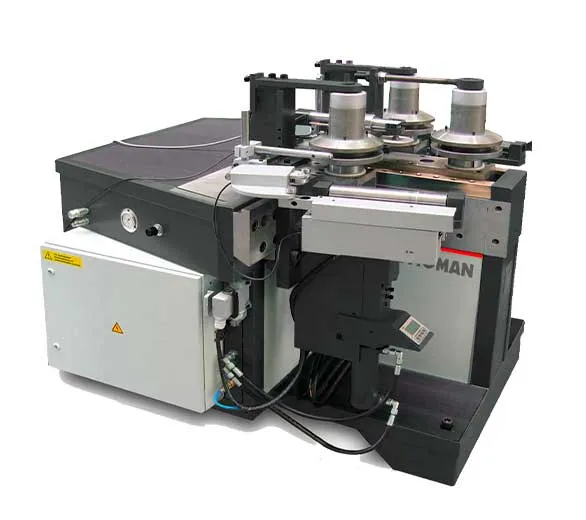
Thoman RB3: Hydraulic Power for Major Challenges
The RB3 features an automatic adjustment system during bending, which corrects deviations in real time and ensures consistent precision, even on difficult materials or complex profiles.
Its rugged, modular design, together with a powerful hydraulic drive, make it the perfect machine for demanding industrial production. From round tubes to rectangular or special profiles, the RB3 delivers uniform, high-quality results.