
When to Recondition Your Machinery and When to Invest in New

When to Recondition Your Machinery and When to Invest in New
In the industrial world, keeping machinery in top condition is a priority that directly affects productivity, costs and operational safety. Sooner or later, though, every company faces a key decision: is it worth reconditioning the machine you already have, or is it better to invest in a new one? It’s not just a matter of numbers — it’s a question of strategy, business vision and future planning.
In this article we look at the technical, economic and operational factors involved in this choice, explaining when it makes sense to recondition and when it’s smarter to replace the machine entirely. You’ll also discover how Curvaser can help you make this decision with the right information, backed by experience, personalized diagnostics and reconditioned machinery options ready to boost your production.


Why getting this decision right matters for your industrial machinery
Investing in industrial machinery isn’t just a technical or accounting matter. It’s a strategic decision that can deeply affect the performance of an entire plant, the quality of the final product and market competitiveness. Many companies put off this kind of decision out of fear of the cost or of interrupting production, without considering that choosing poorly — or not choosing in time — also has a price.
Deciding between reconditioning or replacing a machine requires evaluating multiple variables: current condition, production expectations, technical requirements, current regulations and expected return. Every situation is different, but the most common mistake is going by immediate cost alone, without projecting the medium- and long-term impact.
Timing also matters. A machine that fails constantly doesn’t just generate hidden costs — it can also compromise safety, regulatory compliance or customer satisfaction. That’s why acting ahead of time is essential. A professional diagnostic can make the difference between a profitable investment and a poorly calculated expense. Ultimately, machinery is the heart of many industrial processes. And like any heart, it needs check-ups, care and, sometimes, a timely replacement. Making this decision with technical judgement and a forward-looking view is what sets apart the companies that stay competitive.
What does reconditioning industrial machinery involve, and what benefits does it offer?
Reconditioning an industrial machine isn’t simply “fixing it”. It’s an in-depth technical process aimed at restoring its original capabilities — and even improving them — extending its service life, optimizing its performance and adapting it to today’s production demands. In expert hands, it can be a highly profitable strategic investment.
Main advantages of reconditioning
Here are some of the most significant advantages industrial reconditioning offers:
- Significant savings compared with buying new, with investment ratios that can be between 40% and 70% lower.
- Less downtime, especially if the reconditioning is carried out in phases or on specific components. And with enough advance planning to avoid prolonged stoppages and rushed work against the clock.
- Continued use of the tooling already adapted for production. The tooling already available for the machine’s production often isn’t given enough credit — but what if you had to design, manufacture, test and adjust it all again from scratch?
- Keeping the existing layout and processes, avoiding changes to production lines or excessive staff retraining.
- Adaptation to current regulations, including improvements in safety, energy efficiency or automation.
- Improved performance and reliability, when paired with technical adjustments, software updates or modernized components.
These advantages are especially notable in sectors where the machinery has a rugged, modular structure, as is the case with bending machines, forming machines and other metalworking equipment.
Ideal cases where reconditioning is the best option
Reconditioning is usually the best decision when some of these conditions apply:
- The machine’s base structure is in good condition.
- The fault is concentrated in electronic, hydraulic or control components.
- There are no major changes in the type of production or materials being worked.
- You need a fast solution with a lower initial cost.
- You want to restore performance without a major investment.
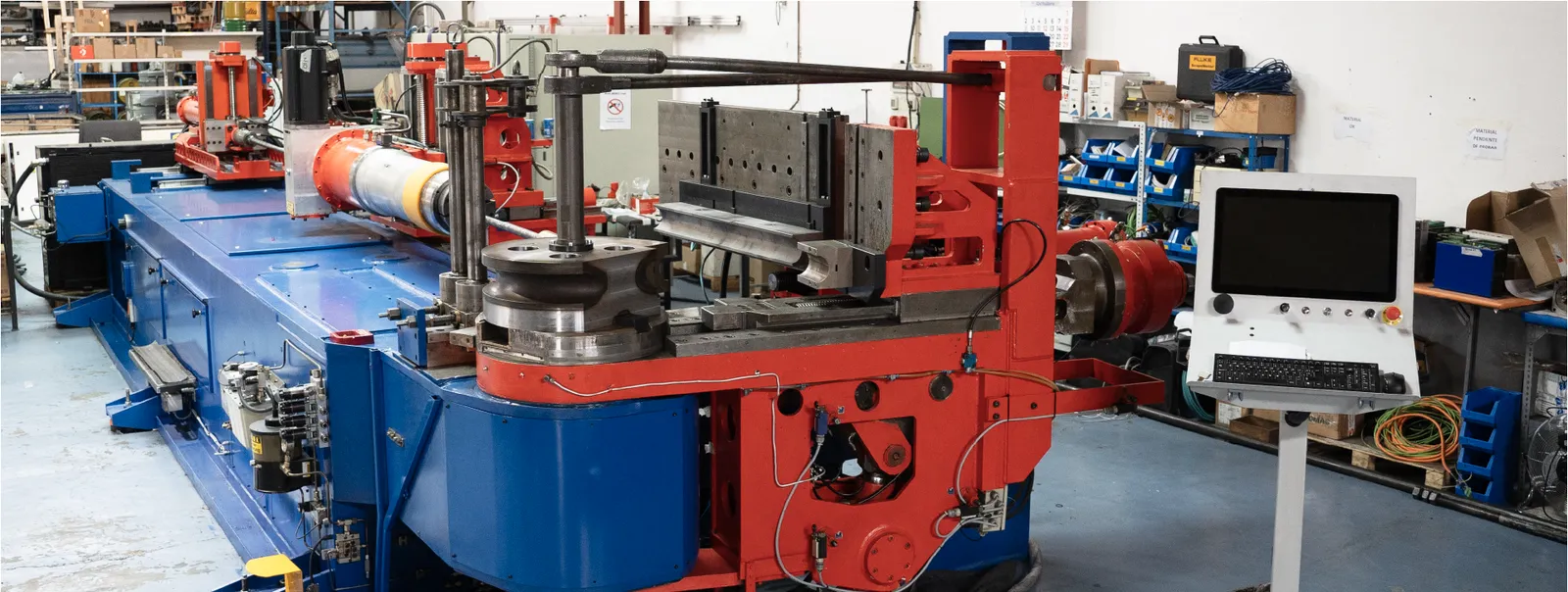
At Curvaser, for example, we’ve successfully reconditioned bending machines with more than 20 years of use, which, after going through our technical process, have gone back into operation with quality and precision guarantees comparable to a new machine.
When is it better to invest in new machinery?
Although reconditioning offers many advantages, there comes a point where keeping an old machine running can become an operational burden. Knowing how to spot that moment is key to avoiding hidden costs, loss of competitiveness or unnecessary risk.
Signs your machinery no longer deserves reconditioning
There are certain clear indicators that show when it’s better to take the step toward a new machine:
- Frequent mechanical breakdowns, causing unplanned stoppages and hurting productivity.
- Obsolete components or spare parts, making it difficult or very costly to keep the machine running. Or structural materials that are already outdated.
- Technical limitations when it comes to adapting to new materials, geometries or work volumes.
- Excessive energy consumption compared with more efficient current technology.
- Safety issues that can’t be resolved with a partial update.
- Changes in project references that require manufacturing new tooling, templates, processes, etc.
If your equipment shows several of these symptoms, investing in a new machine can not only solve your current problems, but also open up new production opportunities.
Advantages of new machinery in productivity and safety
Adding new machinery isn’t just a technical upgrade — it’s an investment in growth. Its main advantages include:
- Increased productivity, thanks to faster, more precise, more automated work cycles.
- Lower energy consumption, with more efficient, sustainable technology.
- Greater safety for operators, in compliance with up-to-date regulations and better protection systems.
- Connectivity and digital integration, enabling remote control, traceability or predictive maintenance.
- Manufacturer’s warranty, which reduces risk and guarantees availability of technical support.
Below, a comparison table to help visualize the main differences:
| Aspect | Reconditioned | New |
| Initial investment | Low to moderate | High |
| Lead time | Fast if already in stock | Medium/long depending on manufacturing |
| Fit with current layout | High | Requires analysis or adjustments |
| Estimated service life | Medium-high | Maximum |
| Energy consumption | Moderate (if updated) | Optimal |
| Technology level | Medium (depending on updates) | High |
| Support and spare parts | Can be limited | Full availability |
Key criteria for making a good decision
Deciding between reconditioning or investing in a new machine shouldn’t be based on price alone. There are multiple variables worth weighing to make a decision that’s profitable over time and consistent with your production goals.
Real cost vs. long-term value
The initial cost can be misleading if you don’t consider factors such as:
- Future maintenance and repair costs
- Impact on production efficiency
- Cumulative energy consumption
- Residual value of a reconditioned machine versus a new one
A larger investment can deliver a higher return if it improves cycle times, reduces failures and lets you take on more workload. Evaluating the total cost of ownership (TCO) is essential for a fair comparison.
Impact on production, maintenance and regulations
You should also consider:
- Does the reconditioned machine let you maintain or increase production?
- Does it meet current safety and environmental regulations?
- Can your in-house maintenance team manage its operation?
- Does it adapt to future growth or diversification needs?
A common mistake is making these decisions in isolation, without looking at the operational or strategic context. It’s best to analyse the whole production ecosystem and anticipate how each option will affect day-to-day work on the shop floor.
To make this evaluation easier, here’s a practical checklist:
Checklist for deciding whether to recondition or invest in new machinery:
- Is the machine’s structure in good condition?
- Are the faults identifiable and repairable?
- Is productivity still acceptable?
- Are spare parts available without major costs?
- Does it meet safety and emissions regulations?
- Do I have budget for a new machine, or would it be a financial risk?
- Do I need new capabilities the current machine can’t offer?
- Is there a reliable supplier who can recondition it with a warranty?
If you answer yes to most of the first few questions, reconditioning could be the best option. If not, it’s time to consider a new investment.
Curvaser’s experience in machinery reconditioning and sales
When it comes to reconditioning industrial machinery, experience and technical know-how make the difference. At Curvaser we’ve spent years helping companies extend the service life of their equipment with customized, efficient and safe solutions.
Real cases and types of reconditioned machines available
We’ve worked with a wide range of equipment, from tube and profile bending machines to auxiliary machinery for metal processes. Our technical team analyses each case in depth and proposes a custom reconditioning plan, which can include:
- Replacement of hydraulic, electrical or electronic components
- Control system and software updates
- Recalibration and precision improvements
- Repainting and cosmetic reconditioning
- Adaptation to current safety regulations
We also keep a stock of reconditioned machinery for sale, ready to be quickly integrated into your production line. Every machine is delivered with a warranty, a functional test and technical support.
What a no-obligation professional diagnostic includes
Before making any decision, we offer a technical diagnostic service that includes:
- Full inspection of mechanical and functional condition
- Estimated reconditioning cost analysis
- Technical comparison with equivalent new models
- Personalized recommendations based on your production goals
This diagnostic comes with no obligation, and is a valuable tool for understanding your options objectively.
If you’re weighing up what to do with your machinery, our team can help you make an informed decision, with no pressure and with the information that really matters.
Make a smart decision for the future of your plant
Reconditioning or investing in new machinery isn’t a simple decision, but it is an opportunity to align your operation with your productivity, safety and growth goals. Analysing your situation with sound judgement, working with experts and planning ahead are essential steps to avoid costly mistakes.
At Curvaser we believe every machine has unique potential. Sometimes that potential is recovered through professional reconditioning. Other times, the best move is to invest in new technology. Either way, our team is ready to help you clearly assess which option is best for your plant. Do you have a machine that’s starting to show signs of wear? Are you unsure whether to repair it or replace it? Get in touch with us. We can help with a no-obligation diagnostic or show you our current selection of reconditioned machinery ready to work.


Take a look at the reconditioned machines available now, ready to start producing.