
Coil feeding and material handling equipment to complete the wire and rod line.
VARO
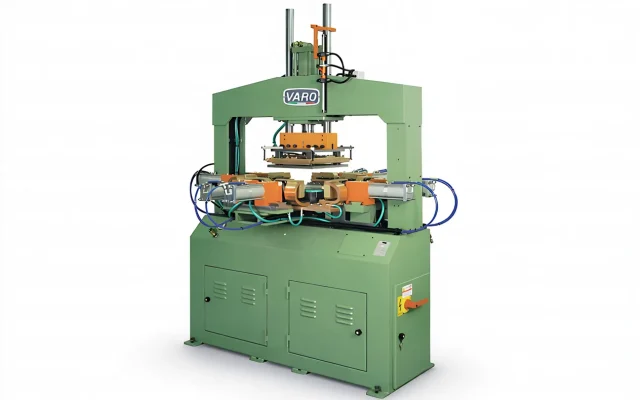
Press with Welding Station
Industrial press equipped with a welding station for manufacturing metal baskets with a welded top frame and automated production.
View machine →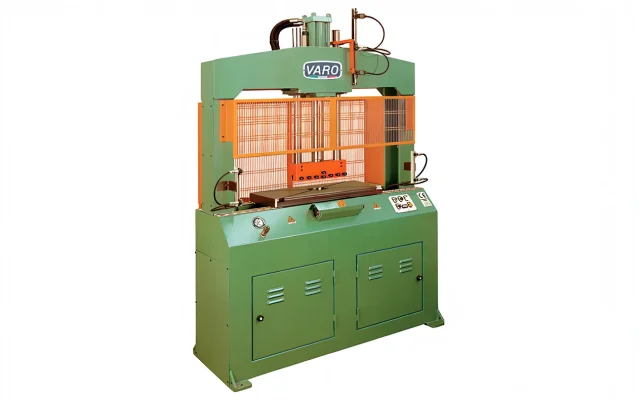
VARO
Industrial Hydraulic Press – Varo Pressa 10/20/25T
VARO
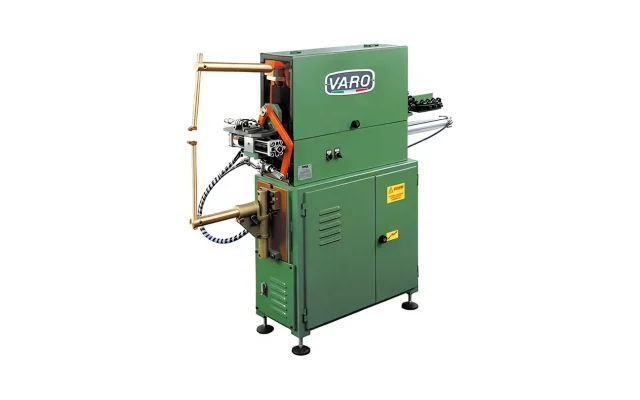
Combined Machine for Bending, Cutting and Welding Wire Hooks
VARO
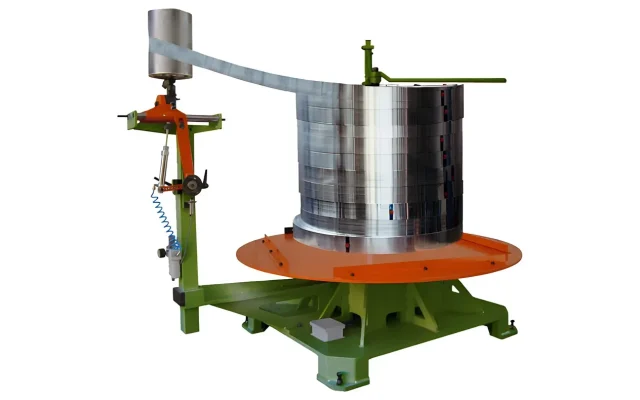
Motorized Wire and Strip Uncoiler AM30Q
VARO
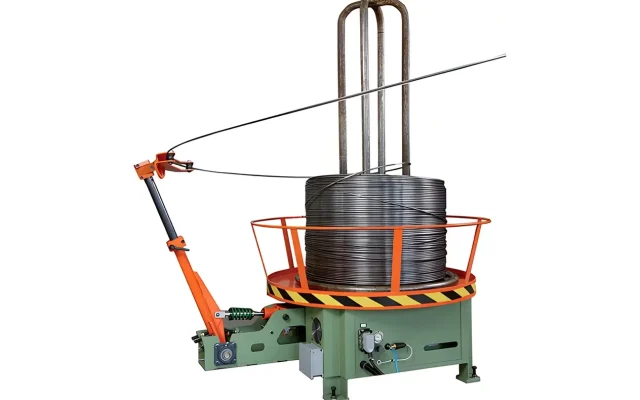
Motorized Wire Uncoiler
Coil feeding and material handling. To complete the rod line.
It's chosen based on the full line, not in isolation.
Technical support from the design stage keeps it from working as an isolated station.
Which auxiliary equipment do you need?
Besides the main process machines — straightening, bending, welding — a wire rod production line needs complementary equipment: coil feeding systems and material handling that reduce manual intervention between stations and make it easier to integrate the full line.
Chosen for the line, not in isolation
The rod diameter, the coil format, and the pace of the straightening machine or the bending machine it feeds determine which auxiliary equipment is compatible with your line.
When the investment is justified
Properly sized auxiliary equipment keeps material feeding from becoming the bottleneck of a line that otherwise has enough production capacity. It also reduces safety risks associated with manually handling heavy coils and rods.
Integration from the design stage
Technical support from the integration design stage is decisive so the auxiliary equipment works in a coordinated way with the main machine from startup, especially on medium and high-volume lines that are already automated or semi-automated. Without that support, it’s common for the auxiliary equipment to work independently rather than as part of a coordinated line.
Related searches rod straightening machines · rod bending machines · rod trimming machines · rod beveling machines
Official distributors of the brands that set the standard in the industry.